SLOW TRAVEL · OSAKA · EAT
What to eat in Osaka: a month in "the nation's kitchen"
Osaka calls itself the city of kuidaore — eating yourself into ruin. Its best food isn't in formal restaurants but at counters, in covered shopping streets and at standing bars. The upside of staying a month is that you don't have to cram it into a weekend: take one theme a week and work through it slowly.
The short answer
- Osaka's food culture comes from history: for centuries goods from all over Japan passed through its merchants, earning it the name "the nation's kitchen", and kelp shipped from Hokkaido gave the city its light, savoury broths.
- It's a merchants' city: the ideal is tasty, good value, quick and lively, so the most local food is at counters and in shopping streets.
- The essentials: okonomiyaki, takoyaki, kushikatsu, udon (especially kitsune udon), yakiniku and offal, fugu in winter, retro Western-style dishes and pork buns.
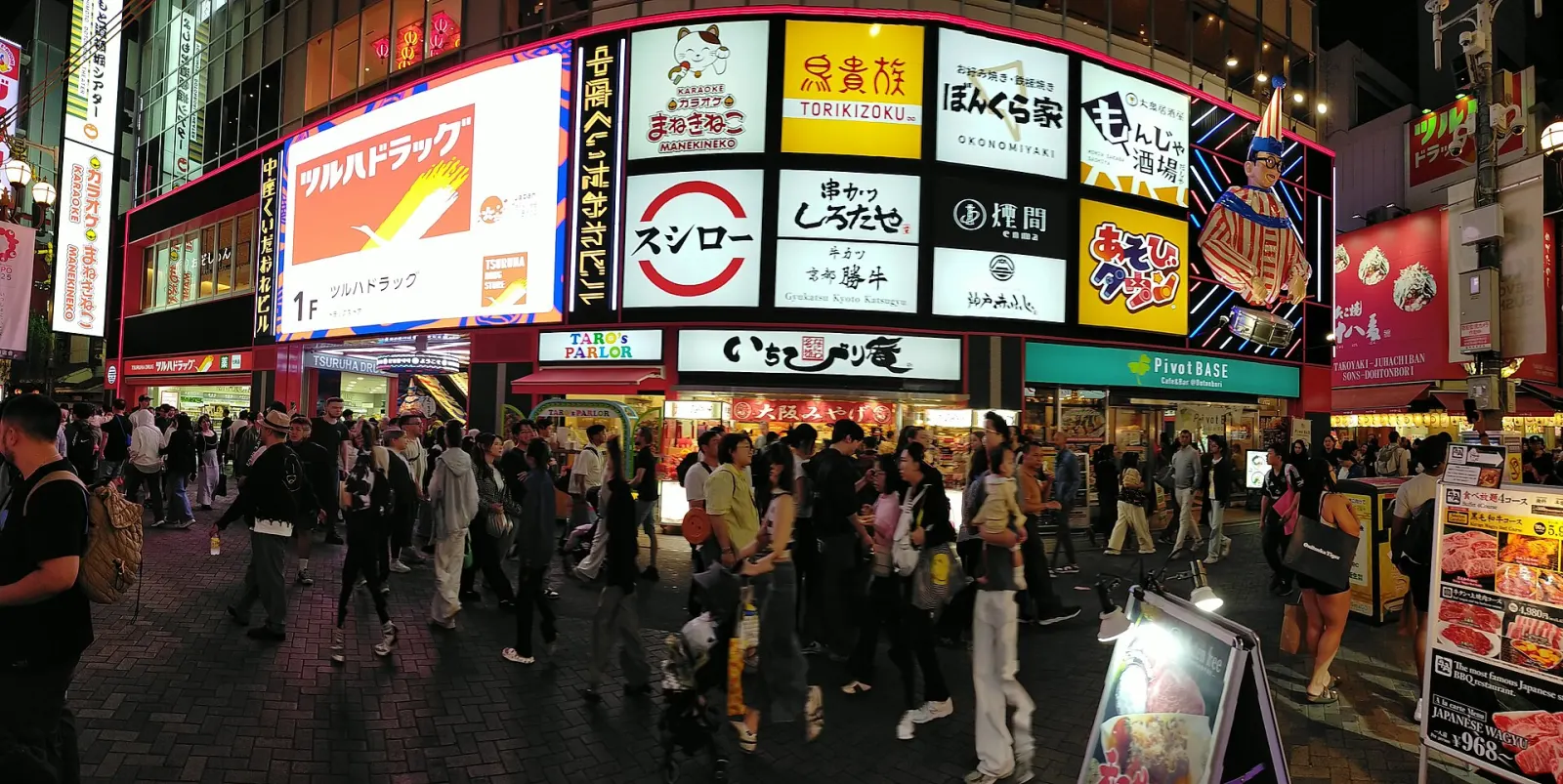
- By neighbourhood: Dotonbori and Namba for okonomiyaki and takoyaki, Shinsekai for kushikatsu, Tsuruhashi for yakiniku, and Tenma, Kyobashi and Fukushima for drinks.
Okonomiyaki and takoyaki
Okonomiyaki is a savoury pancake of batter, shredded cabbage and usually pork, cooked on a hotplate and finished with a sweet-savoury sauce, mayonnaise, bonito flakes and seaweed powder. At many places you cook it yourself at a hotplate built into the table; staff will help if you ask.
Takoyaki — balls of batter with a piece of octopus inside, crisp outside and molten within — are generally said to come from Osaka. Aizuya in Tamade, Nishinari, calls itself the original and has been making them since the early Showa era. Plenty of Osaka homes own a takoyaki pan.
- Where: densest around Dotonbori and Namba, but every residential shopping street has a family-run place.
- How locals eat it: okonomiyaki often comes as a set meal with rice — very Osaka. Takoyaki straight from the pan are scalding; poke a hole and let them cool.
- Long-stay idea: buy a takoyaki pan on Doguyasuji and make them at home.
Kushikatsu in Shinsekai
Skewers of meat, seafood and vegetables, battered, deep-fried and dipped in a shared pot of sauce. Daruma, open since the late 1920s, is one of the best-known names in Shinsekai.
- The one rule: no double-dipping in the shared sauce. Want more? Use a piece of the free raw cabbage to scoop sauce over your skewer.
- Where: Shinsekai, under the Tsutenkaku tower; also around Tennoji and Namba.
Udon and dashi
Osaka udon comes in a pale broth that's full of flavour, built on kelp and bonito. Kitsune udon, topped with a slice of sweet fried tofu, is usually traced to Usami-tei Matsubaya in Senba.
- Where: stand-up udon counters near stations (a bowl in minutes) through to old udon houses around Namba and Senba.
- At home: supermarkets sell fresh noodles and dashi packs — an easy dinner.
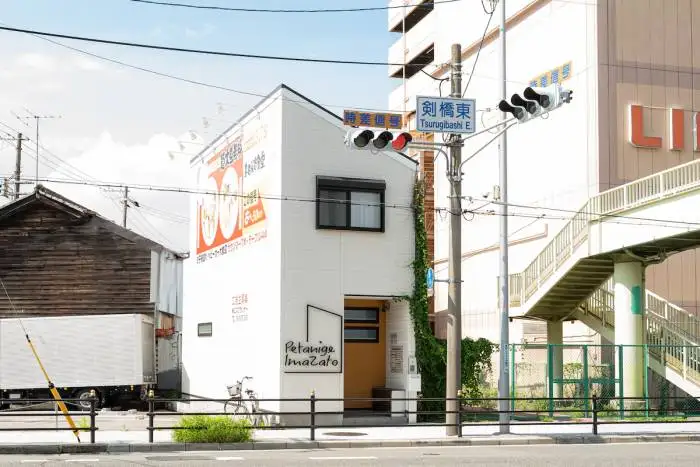
Yakiniku and horumon in Tsuruhashi
Walk out of Tsuruhashi Station and you smell charcoal. The area and neighbouring Ikuno have a large Korean community, so it's full of yakiniku (grilled beef), horumon (offal), kimchi and Korean restaurants, plus the maze-like Tsuruhashi market.
- At home: buy kimchi and Korean side dishes at the market and you've got dinner with a bowl of rice.
Fugu: winter in Osaka
Osaka loves pufferfish; fugu hotpot here is called tecchiri. Preparing fugu requires a special licence, so licensed specialist restaurants are safe. Roughly November to March is the season.
Retro classics: omurice, curry and pork buns
- Omurice: Hokkyokusei in Shinsaibashi, open since the Taisho era, calls itself one of the birthplaces of the omelette-wrapped rice dish.
- Curry: Jiyuken in Namba, open since the late Meiji era, serves rice and curry pre-mixed with a raw egg on top.
- Pork buns: 551 Horai's buta-man are an Osaka institution, sold at the Namba main shop and at major stations and department stores.
- Kissaten: old-school coffee shops in the shopping streets serve morning sets of toast, egg and coffee.
💡 These shops have been around for decades, but hours and closing days change — check before you go.
Drinks: standing bars and izakaya
After-work drinking is part of Osaka life. At a tachinomi (standing bar) you have a beer and a couple of small plates and leave twenty minutes later — the quickest way into local life.
- Kyobashi: famous for its standing bars by the station, busy from mid-afternoon.
- Tenma and Tenjinbashisuji: dense with small bars and seafood izakaya.
- Fukushima: one stop from Umeda, lots of small, good restaurants and bars.
- Shinsekai: kushikatsu and beer with a Showa-era backdrop.
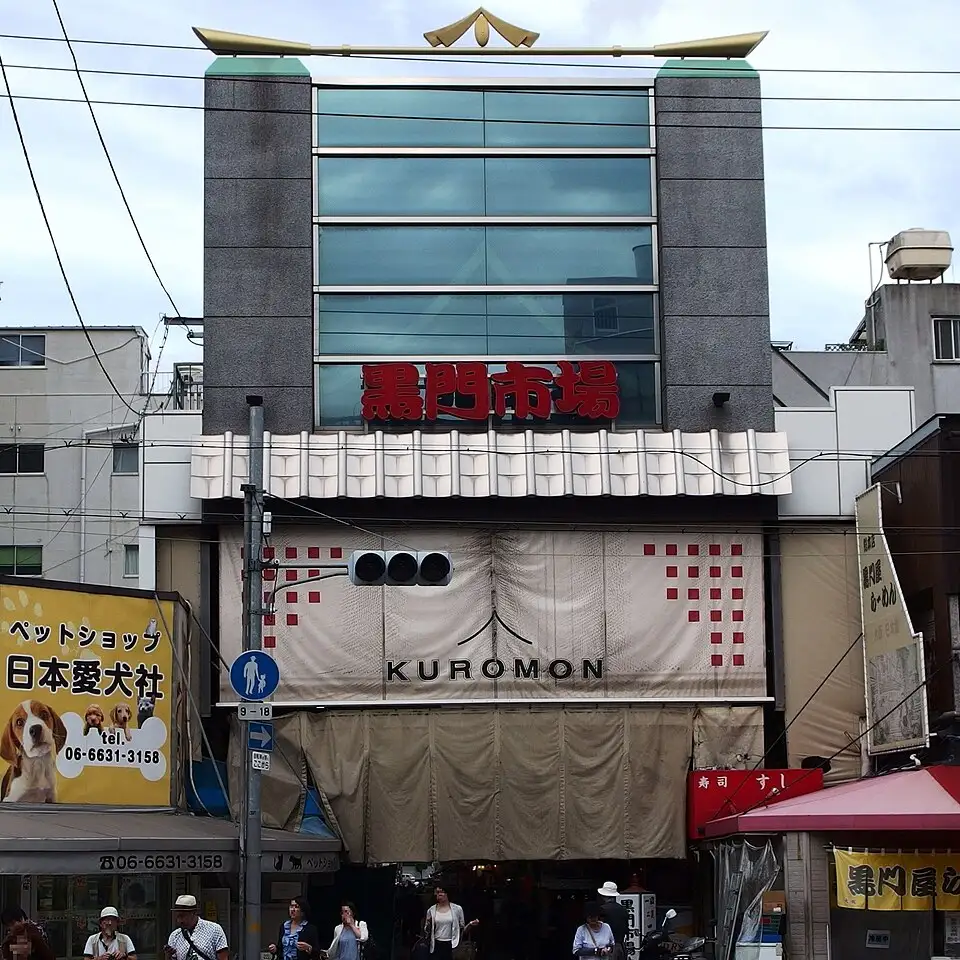
Markets and cooking for yourself
- Kuromon Market: seafood and street snacks; very touristy now, fun to browse.
- Tsuruhashi Market: kimchi, Korean groceries, dried goods and fish.
- Tenma Market: a local market near Tenjinbashisuji.
- Shopping streets and supermarkets are where daily shopping happens; many supermarkets mark down ready meals in the evening.
- Depachika: the food halls under department stores in Umeda and Namba, for bento, ready meals and sweets.
A month of eating, week by week
- Week 1flour week — okonomiyaki and takoyaki in Dotonbori and Namba; buy a takoyaki pan.
- Week 2Shinsekai and Tennoji — kushikatsu, fugu in winter, an afternoon at Spa World.
- Week 3Tsuruhashi and Ikuno — yakiniku, markets, Korean food.
- Week 4drinks — standing bars in Kyobashi, Tenma and Fukushima.
- Every morninga kissaten or a stand-up udon counter, like a local.
💡 Our slow travel guide to Osaka covers daily life in each neighbourhood and our homes there.