Street & neighbourhood · Kyoto
Pontocho
先斗町
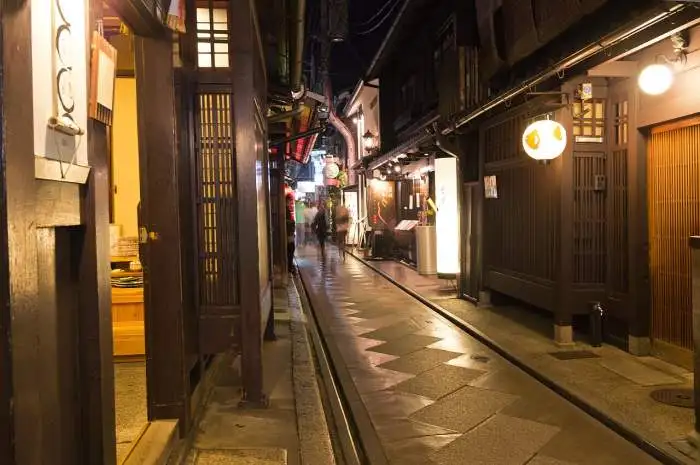
Pontocho is a narrow stone-paved lane between Sanjo and Shijo streets, running along the Kamo River. It was built on land reclaimed from the riverbed in 1670 and is one of Kyoto's five geisha districts, still home to teahouses and the Pontocho Kaburenjo theatre.
By night it glows with lanterns, and parts of the lane are barely wide enough for two people to pass. Wooden restaurant fronts line both sides, from skewer bars to kaiseki; on the river side many have terraces over the water from May to September, the kawayuka season. In October the geiko and maiko put on their annual Suimeikai dance recital.
What to see and do
A walk of about 500 m from Sanjo to Shijo, best after dark.
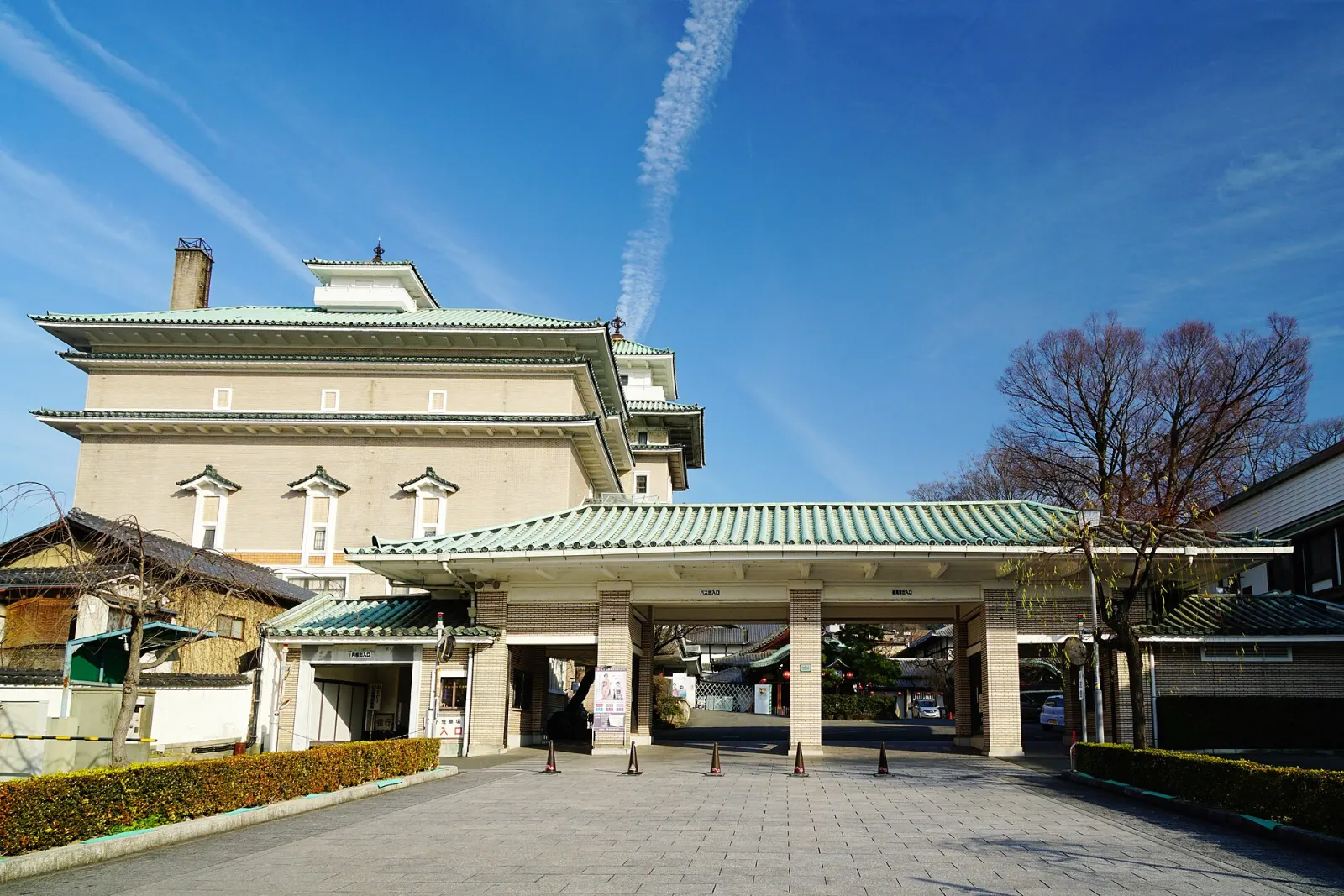
The district's 1927 theatre, home of the Kamogawa Odori in spring and the Suimeikai in autumn.
Restaurants on the east side look over the Kamo River, with open-air terraces in summer.
Stroll down to the riverbank just behind the lane.
What’s on
Good to know
- Do not stop or photograph geiko and maiko on their way to appointments; the lane is narrow and they are working.
- Many restaurants are small and popular; book dinner ahead, especially on weekends.
More art nearby
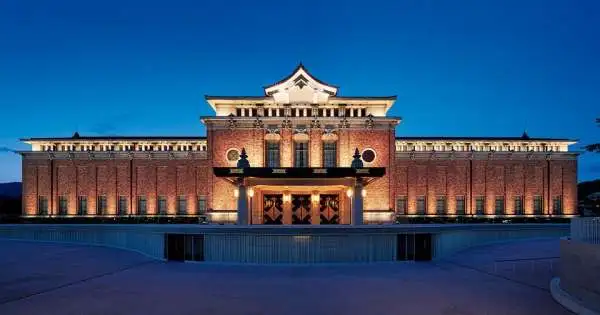
Kyoto National Museum
Treasures from Kyoto’s temples and court, in a red-brick hall that opened in 1897.
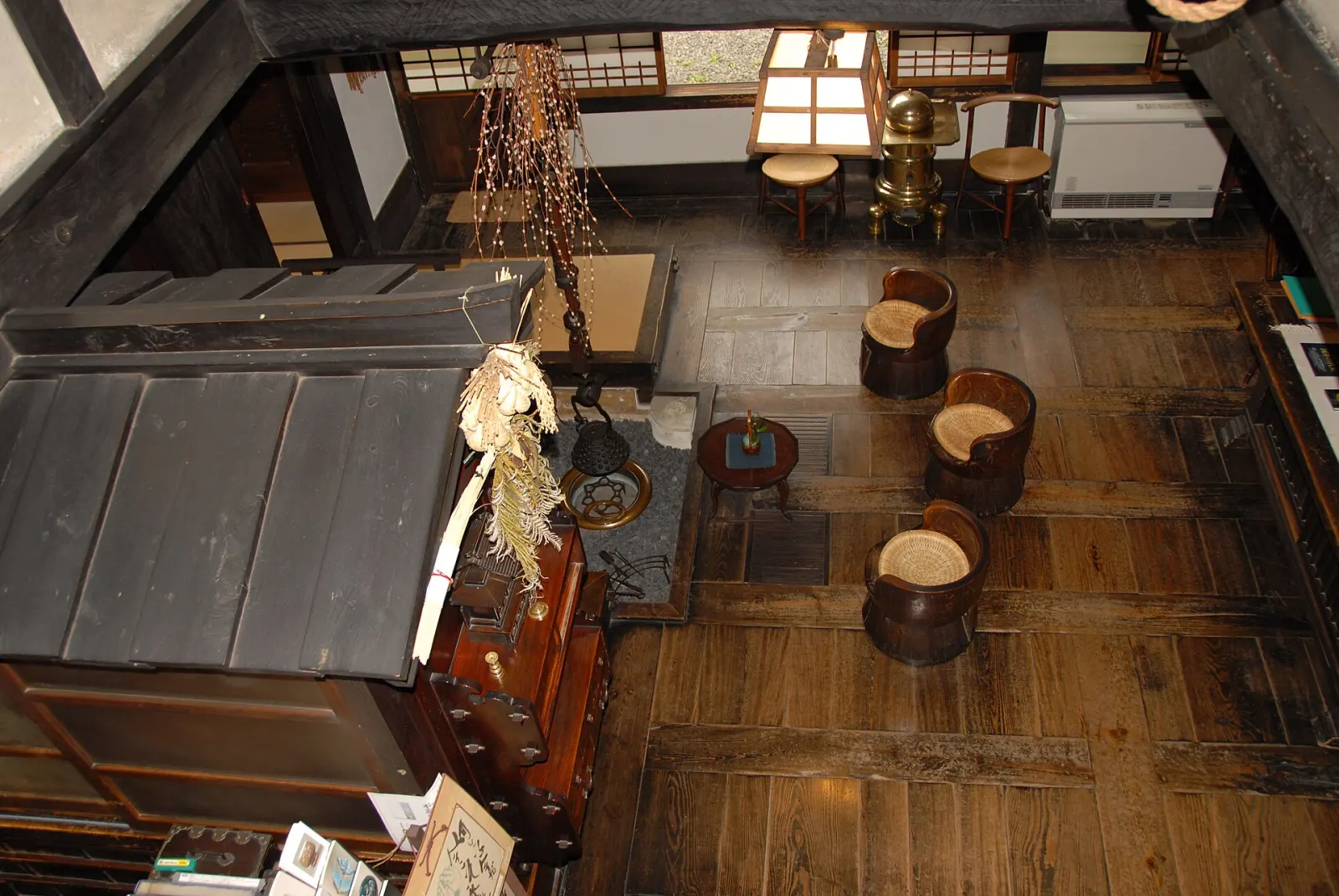 Nicholas & Debra Jewell · CC BY 2.0 · Wikimedia Commons
Kawai Kanjiro’s House
The home and climbing kiln of a folk-craft potter, kept the way he left it.
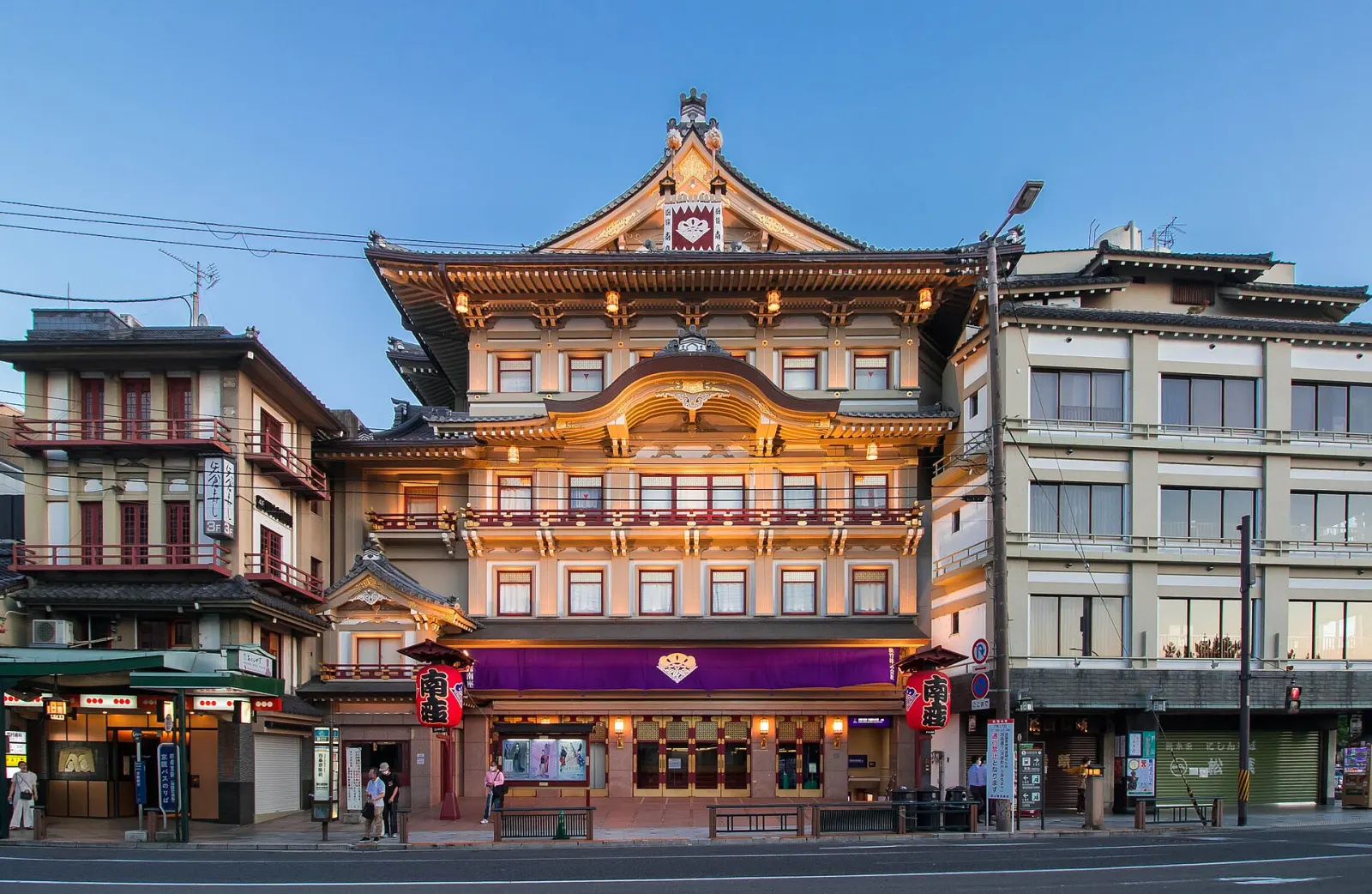 Kakidai · CC BY-SA 4.0 · Wikimedia Commons
Minamiza
Kabuki started on this riverbank in the early 1600s. Minamiza is Japan’s oldest kabuki theatre.
 663highland · CC BY-SA 4.0 · Wikimedia Commons
Gion Corner
Seven traditional arts on one stage in an hour: tea ceremony, koto, flower arranging, kyogen, bunraku and maiko dance.