 Saigen Jiro · CC0 · Wikimedia Commons
Temple & shrine · Osaka
Sumiyoshi Taisha
住吉大社
Sumiyoshi Taisha is the head shrine of about 2,300 Sumiyoshi shrines across Japan and one of the oldest in Osaka. Its four main halls are National Treasures. They are built in the Sumiyoshi-zukuri style, one of the oldest shrine styles in Japan, with straight gable roofs and no curves.
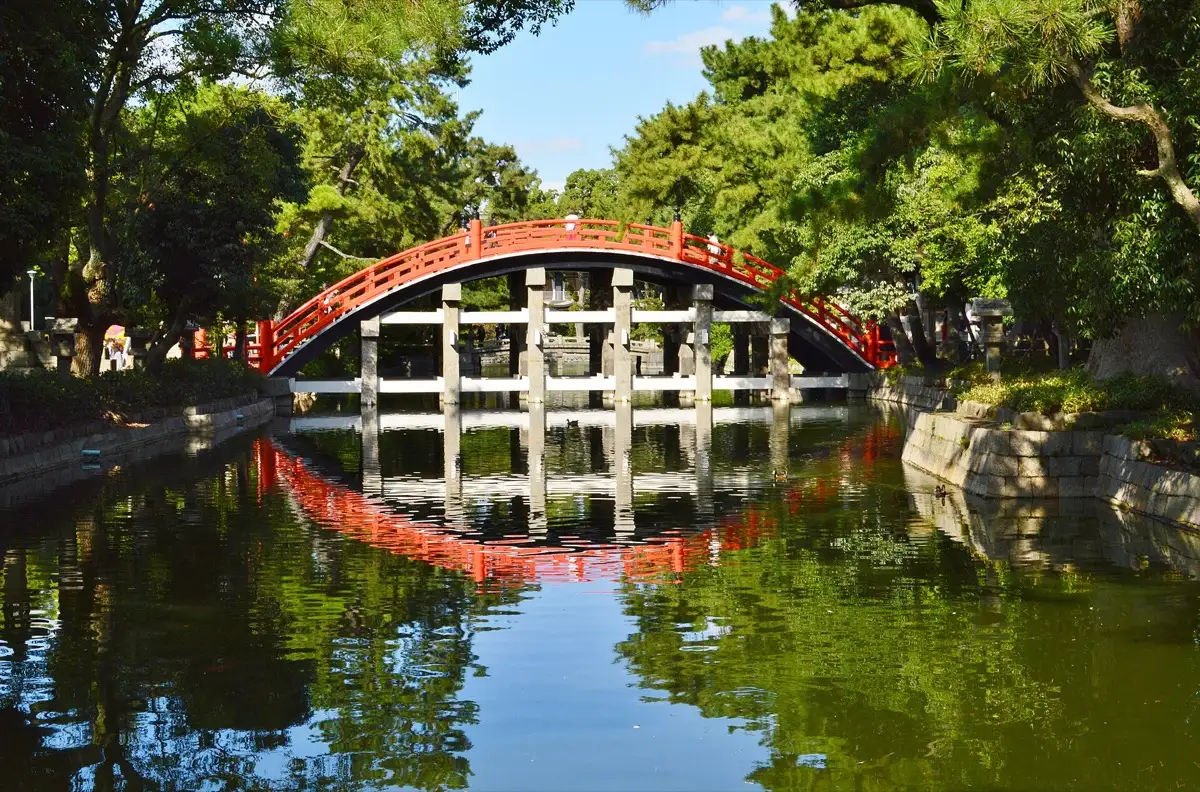
You enter over the Sorihashi, a steep red arched bridge about 21 metres long that you climb up and then down. Beyond it the grounds are calm and wide, with stone lanterns, a sacred tree over 1,000 years old and a stone stage from 1607. Locals come here to pray for business, safe voyages and good harvests.
What to see and do
The steeply arched red bridge at the entrance is about 21 m long and 5 m high. Crossing it is part of the visit.
The four main halls (built 1810) show the Sumiyoshi-zukuri style, one of Japan's oldest shrine designs.
Lift the stone and make a wish: if it feels lighter the second time, the wish may come true, so the custom says.
A stone stage for sacred dance from 1607, an Important Cultural Property.
Good to know
- The Hankai tram from Tennoji or Ebisucho stops right at the gate and is a fun ride in itself.
- The Sorihashi is steep and slippery when wet; use the handrails.
More art nearby
 KENPEI · CC BY-SA 3.0 · Wikimedia Commons
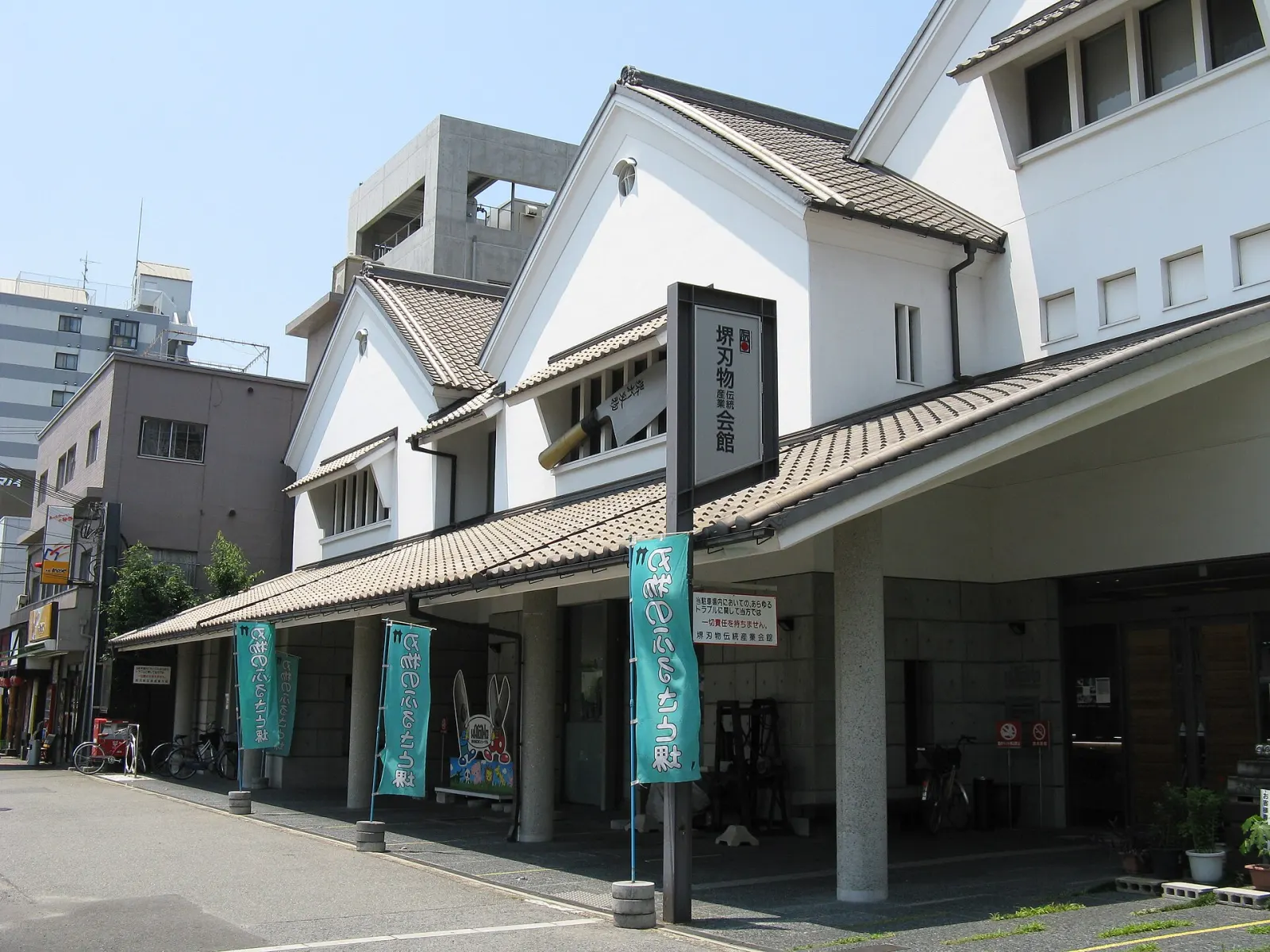
Sakai knives
Sakai has forged blades since the 1500s, and many chefs in Japan still cut with them. The Hankai tram runs there.
 Ogiyoshisan · Public domain · Wikimedia Commons
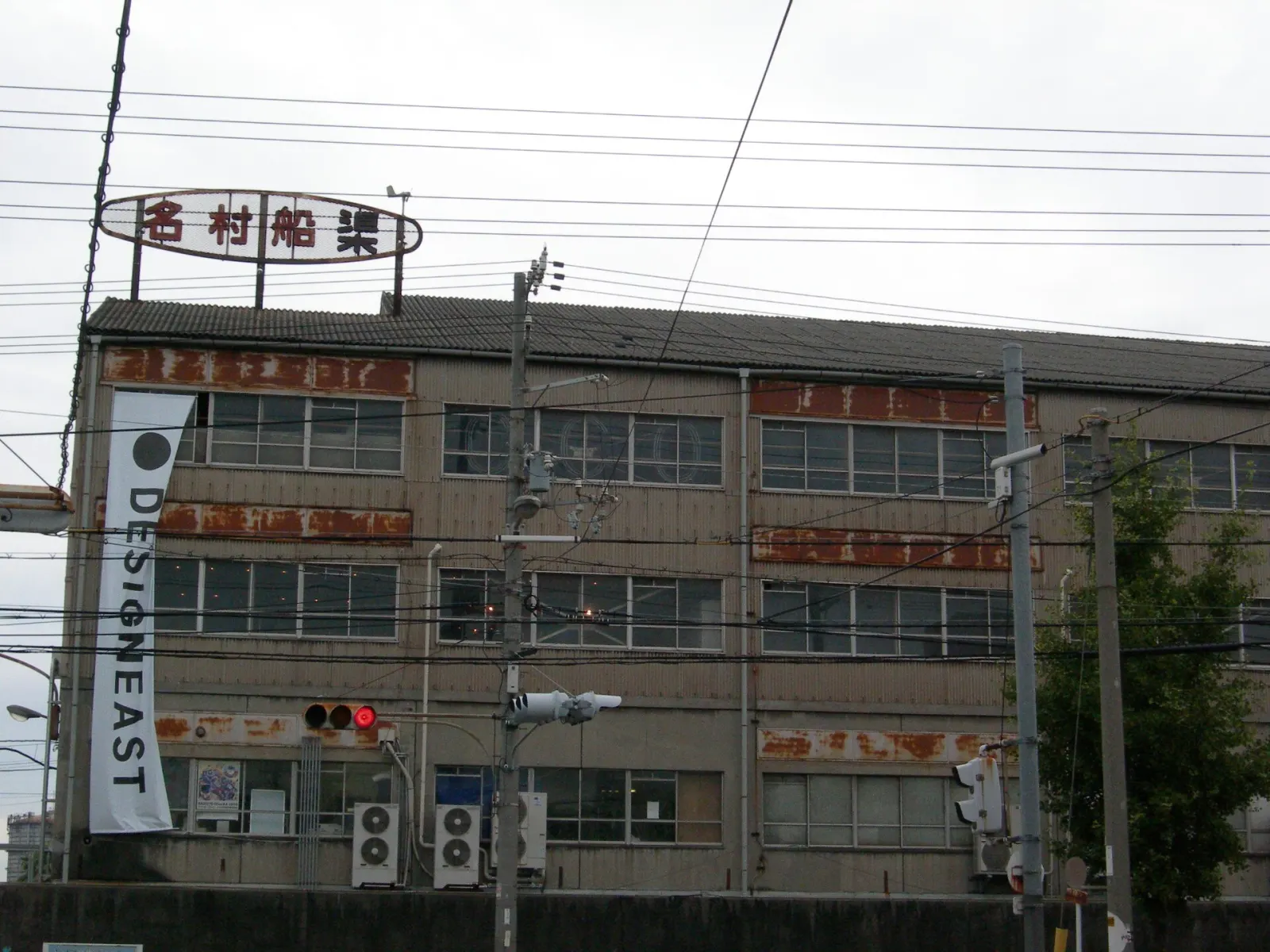
Kitakagaya
A former shipbuilding district where warehouses became studios and walls became murals.
 聖石大戦ぶぅぶぅ · CC BY-SA 4.0 · Wikimedia Commons
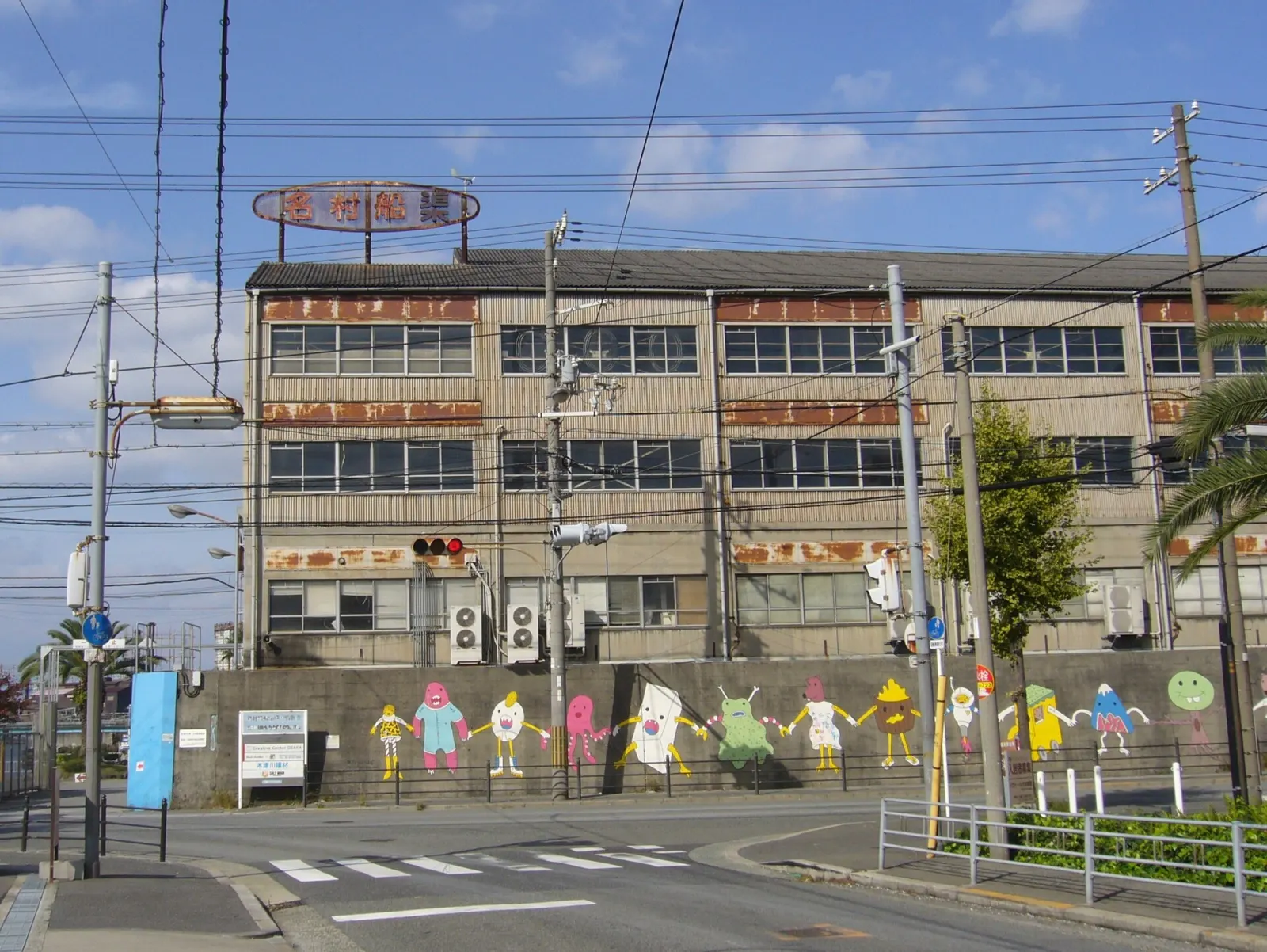
Creative Center Osaka
Former shipyard buildings on the waterfront, now used for art events and studios.
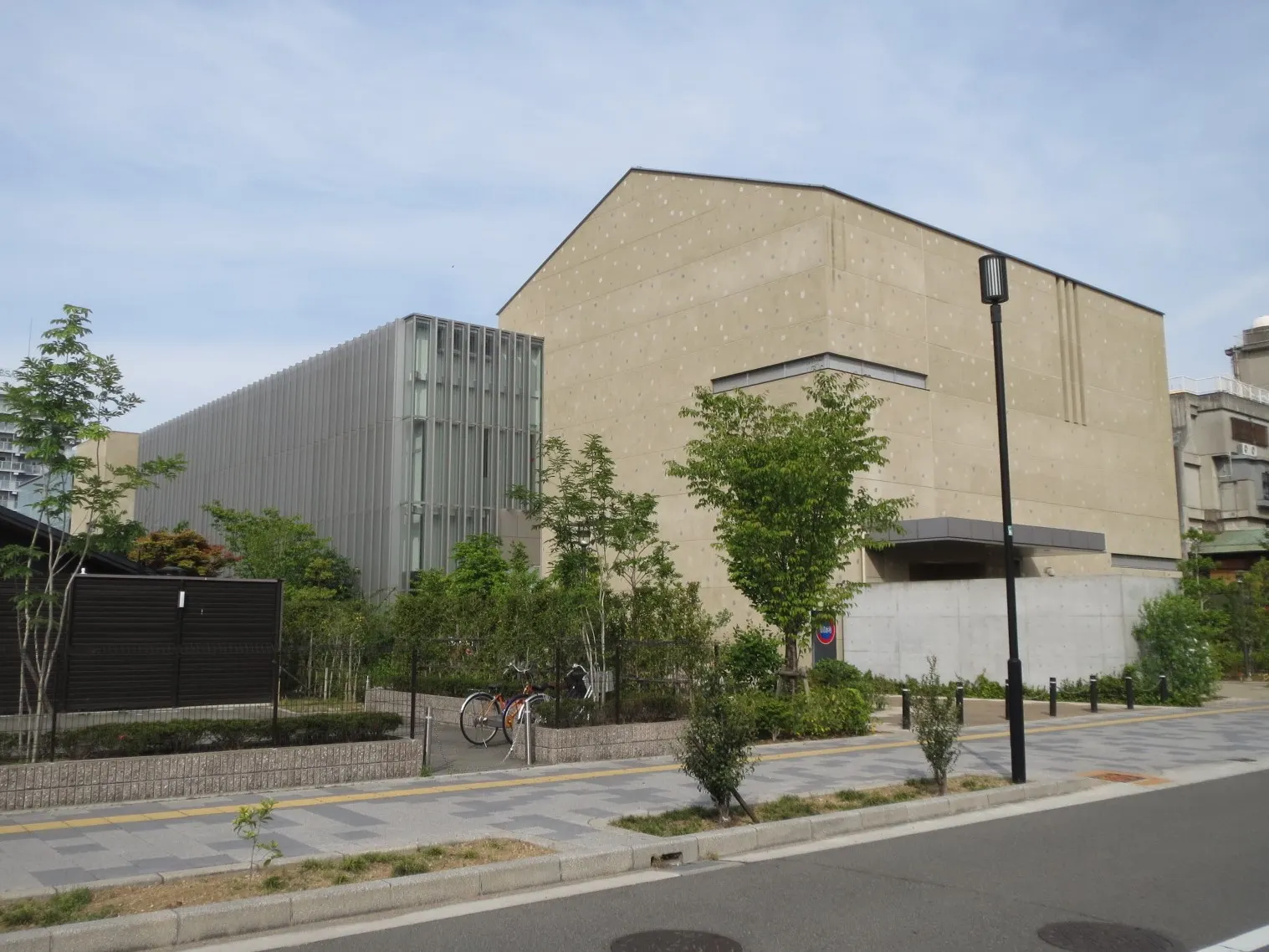 Ty19080914 · CC BY-SA 4.0 · Wikimedia Commons
Sakai, home of Sen no Rikyu
The tea master who shaped the tea ceremony was born in Sakai. The museum recreates his tiny tea room.