아직 번역 전이라 영어로 보여 드려요.
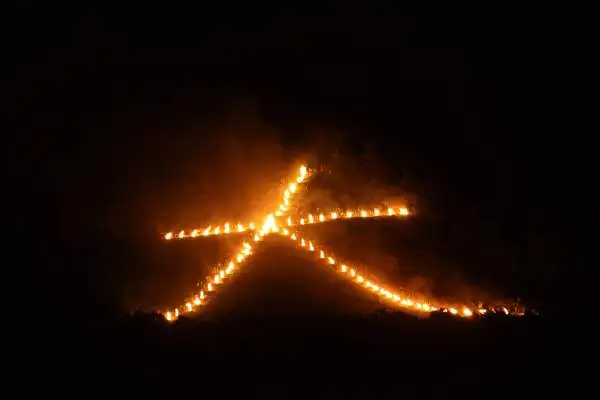
Every year on the night of August 16, six gigantic fiery characters and shapes appear on the mountains surrounding Kyoto. This is "Gozan no Okuribi" (五山送り火) — a Buddhist ritual held on the final day of Obon to send the spirits (ancestors) back to the other world. With a long history (its exact origins are unknown), it is a quintessential summer event in Kyoto, drawing many visitors from Japan and abroad. Experience this fantastical night of fire and stillness on-site.
The Character "Dai" — Higashiyama・Nyoigatake
The most famous okuribi. The character "大" (dai) appears on Nyoigatake (如意ヶ嶽) in Higashiyama. Ignition is around 8:00 PM. Visible from many places in Kyoto city, popular viewing spots include the Kamo Riverbed and Higashioji Street.
The Character "Dai" — Near Kinkaku-ji・Ōkitayama
Known as Hidari Daimonji (左大文字), the "大" on Ōkitayama (大北山) behind Kinkaku-ji. Ignition around 8:15 PM. Good viewpoints are around Kinkaku-ji and Kinugasa Mountain. Among the okuribi, this one offers a particularly solemn atmosphere.
"Myō" and "Hō" — Matsugasaki Nishiyama・Higashiyama
In Matsugasaki, northern Kyoto, the characters "妙" (myō) and "法" (hō) appear on two mountains. Ignition around 8:05 PM. This tradition is maintained mainly by local residents, allowing for a relatively quiet viewing experience.
Boat Shape — Nishigamo・Funayama
On Funayama (船山) in Nishigamo, a shape of a boat with sails appears. Ignition around 8:10 PM. Represents a boat carrying spirits to the other world. Viewed from the Kamo River embankment, the reflection on the water is also beautiful.
Torii Shape — Saga・Mandara-yama
On Mandara-yama (曼荼羅山) in Saga-Toriimoto, north of Arashiyama, a torii gate shape appears. Ignition around 8:20 PM. The latest of the okuribi; the flames of the torii seen in silence are mystical.
Viewing Tips — Choosing a Spot and Time
Each fire burns for only about 30 minutes. It is recommended to check a map for good viewpoints in advance and arrive early. The Kamo River banks north of Marutamachi are a popular spot for viewing the Daimonji. Expect crowds; bringing a picnic sheet and snacks will make it more comfortable.
Local Way of Spending — The Spirit of Sending Off Ancestors
The okuribi is not a tourist show but a ritual honoring ancestors. Many local people join their hands in prayer while watching the fires. Visitors are encouraged to feel this quiet atmosphere of prayer.
In Case of Rain — Will It Be Held or Canceled?
The okuribi is generally held even in light rain. However, it may be canceled in strong winds or thunderstorms. Check official announcements on the day.
Access and Traffic Restrictions — Avoid Cars
On the day, roads around the area are heavily restricted from evening, and buses and taxis are extremely crowded. It is wise to go on foot or by bicycle from Kyoto Station or Shijō Kawaramachi. Allow plenty of time for the return trip.
Photography Tips — Tripod and Telephoto Lens
To capture flames in the dark, a tripod is essential. A telephoto lens allows you to zoom in on the mountain characters. Smartphones can also take beautiful photos with night mode or exposure adjustment. However, turn off the flash to avoid disturbing other viewers.
HOW: To avoid crowds, consider the upper Kamo River (Demachiyanagi to Kitayama) as hidden spots. The best season is of course only August 16. Check official traffic regulation information (Kyoto Prefectural Police / Kyoto City) beforehand, and wear comfortable walking shoes. Taxis are nearly impossible to find, so use public transport or walk.