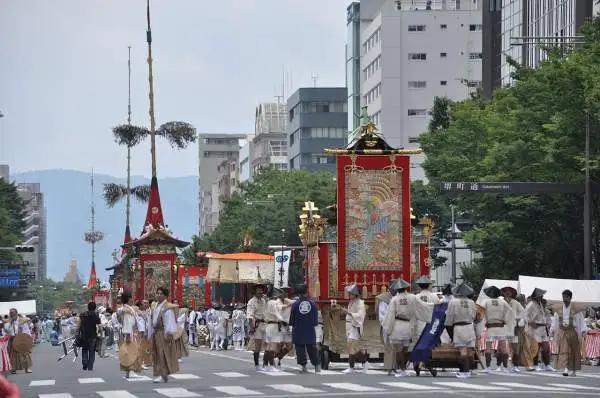
Kyoto’s summer highlight, Gion Matsuri, is the festival of Yasaka Shrine (Yasaka-jinja) that has continued for over 1,000 years. From the "Kippu-iri" (opening ceremony) on July 1 to the "Yakujinja Natsukoshi-sai" (summer passing rite) on July 31, various sacred events are held throughout the month. The biggest attraction is the yamaboko (float) procession on the 17th, but understanding the differences between the yoiyama (eve festivals) and the Saki Matsuri (former festival) and Ato Matsuri (latter festival) allows for deeper enjoyment. Popular among foreign tourists, it is also registered as a UNESCO Intangible Cultural Heritage. This guide focuses on key points so that even first-time visitors can have a fulfilling experience.
Saki Matsuri and Ato Matsuri — Understanding the Schedule
Gion Matsuri is divided into the "Saki Matsuri" (former festival) on July 17 and the "Ato Matsuri" (latter festival) on July 24. Each has a yamaboko procession: the former features 23 floats, the latter 11. If you want to avoid crowds, the Ato Matsuri is recommended. The week before each is called "yoiyama" (eve festival), where floats are lit up and townhouses display folding screens and artworks.
Yamaboko Procession — A Moving Art Gallery Up Close
The biggest highlight is the sight of approximately 12-ton floats parading through Kyoto city. In the Saki Matsuri, the "Nagahata-boko" (long halberd float) leads, famous for carrying a live child (ikichigo). The procession route goes from Shijo-dori to Kawaramachi-dori and Oike-dori. Paid seats are sold for both the Saki and Ato processions; booking in advance is convenient for a guaranteed view. Even free areas offer plenty of excitement.
Yoiyama — Strolling the Night Festival
Yoiyama is held on the evenings of July 14–16 (Saki Matsuri) and July 21–23 (Ato Matsuri); on the Saki Matsuri evenings of July 15–16, the streets lined with floats become pedestrian-only and food stalls line the roads. Enjoy Kyoto specialties (yakisoba, takoyaki, shaved ice, etc.) from food stalls and listen to the "konchikichin" flute and drum music (hayashi) of each float. Particularly notable is the "Byobu Matsuri" (screen festival), where old families open their collections of folding screens and furnishings. Many places are free to enter, offering an excellent opportunity to experience Kyoto’s townhouse culture.
Yasaka Shrine — Visiting the Heart of the Festival
The main deity of Gion Matsuri is Susanoo-no-Mikoto, enshrined at Yasaka Shrine (Yasaka-jinja). The shrine itself is a highlight; its main hall is a National Treasure. On July 17, the "Shinko-sai" (sacred procession) sees the portable shrines (mikoshi) transferred to the Shijo Otabisho (temporary resting place). They return on the 24th during the "Kanko-sai" (return festival). Admission is free, and the shrine is open 24 hours. Goshuin (shrine stamps) are also popular.
Yamaboko-tate — Watching the Assembly Process
About a week before the procession, each float district begins assembling the floats. The traditional technique of binding with ropes without using nails is worth seeing. Assembly for the Saki Matsuri starts around July 10, for the Ato Matsuri around July 18. In some locations, you can watch up close and photograph the craftsmen’s skills.
Chimaki — Buying Amulets for Protection
Each float district sells "yakuyoke chimaki" (protective amulets) before and after the procession. Wrapped in bamboo leaves, these charms are said to ward off misfortune for a year when hung at the entrance. Designs differ by float, and some tourists collect them. Cash is required for purchase.
Ikichigo — Don’t Miss the Child Star of the Procession
The "ikichigo" (live child) who rides on the Nagahata-boko in the Saki Matsuri is a selected elementary school boy. Note that no ikichigo appears in the Ato Matsuri.
Highlight Map — Navigating Smartly
Kyoto City’s official tourism site (Kyoto Travel Navi) provides float locations and procession route information. Since the Saki Matsuri’s yoiyama is especially crowded, checking real-time congestion info on your phone is efficient.
Yukata Experience — Boosting the Festival Mood
During Gion Matsuri, the streets are filled with locals and tourists in yukata (light summer kimono). Rental kimono shops around Shijo-dori offer yukata plans (from about 3,000 yen), including dressing and hair styling. Advance reservation is best. However, be sure to take measures against heatstroke in the intense summer heat.
Street Food — Kyoto’s Unique Flavors
At stalls along Shijo-dori and Karasuma-dori, you can find standard fare like yakisoba, takoyaki, and candied apples. Some cafes offer sweets and drinks exclusive to Gion Matsuri. Many stalls do not accept credit cards, so bring plenty of small change.
【HOW】To avoid crowds, aim for the Ato Matsuri (24th) and its yoiyama (21st–23rd). For the Saki Matsuri procession, booking paid seats (from 6,000 yen) in advance ensures a spot. Hydration and a parasol are essential against heatstroke. Reserve yukata rentals at least a week in advance. Kyoto’s summer is also humid, so take frequent breaks.