Temple & shrine · Kyoto
Ginkaku-ji
銀閣寺
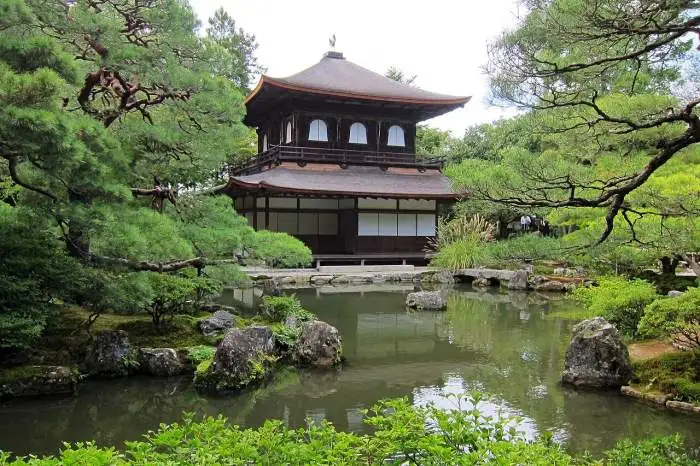
Ginkaku-ji, officially Jisho-ji, began as the Higashiyama villa of the shogun Ashikaga Yoshimasa in the late 15th century and became a Zen temple after his death. The name 'Silver Pavilion' only appeared in the Edo period, as a contrast to the Golden Pavilion, and the building was never covered in silver.
The mood is quiet and refined. A long hedged lane leads to a garden where raked white sand forms a rippled terrace, the Ginshadan, and a flat-topped cone, the Kogetsudai. Folklore says they were made to reflect or hold the moonlight, though the temple itself notes there is little evidence for this. A path then climbs the hillside for a view over the pavilion and the city.
What to see and do
A two-storey pavilion and National Treasure, the only surviving multi-storey garden building of the Muromachi period.
The rippled sand terrace and the sand cone in front of the main hall.
A National Treasure hall that contains the Dojinsai, the oldest surviving four-and-a-half-mat study room; open during special viewings.
Climb above the moss garden for a view over the pavilion.
What’s on
Good to know
- Autumn special viewing tours run in Japanese only, with about 20 people per slot on a first-come basis, and no photos or notes allowed.
- Walk the Philosopher's Path, which starts just outside the gate, to Nanzen-ji.